
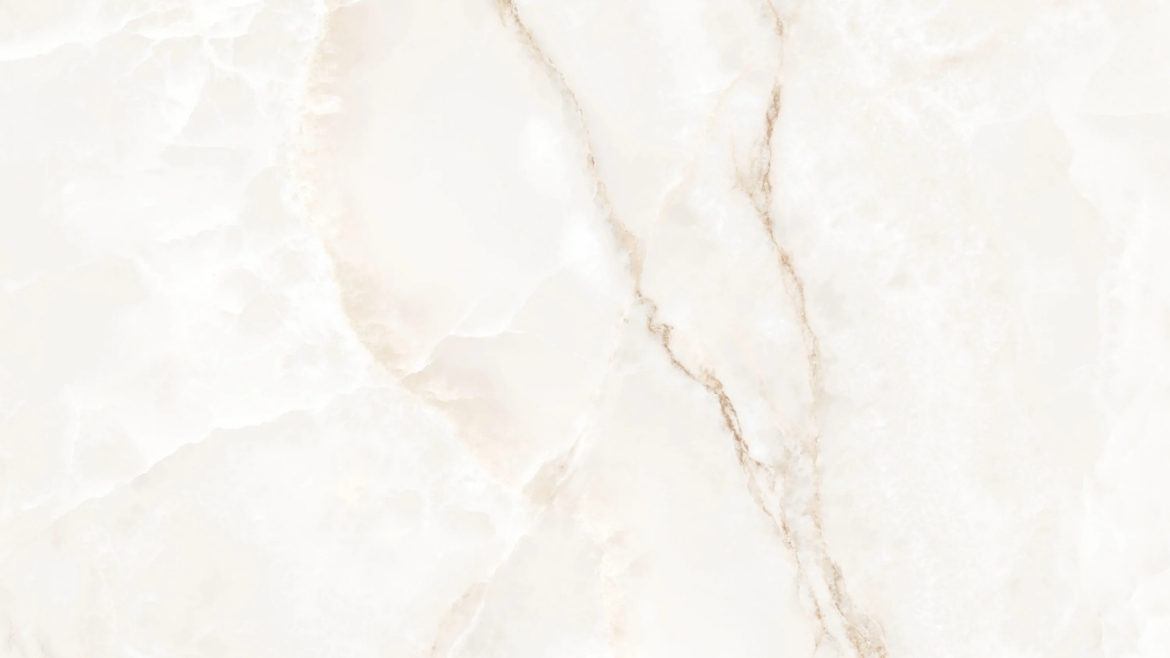
A porcelain outdoor kitchen solves the problem that ruins most outdoor countertops in San Diego: the sun. Porcelain is fired in a kiln at temperatures up to 2400 degrees, with no resin and no synthetic binder anywhere in the slab. There is nothing in it for UV to break down, which is why it will not fade or yellow outside, and why it has become our first recommendation for patios, barbecue islands, and outdoor kitchens across the county.
San Diego is built for outdoor cooking. We grill in January here. But that same year-round sun is exactly what destroys the wrong countertop material, and a lot of homeowners find that out two summers after the install.
This guide covers why porcelain handles outdoor life so well, how we design and build a porcelain outdoor kitchen, what it costs, and where the other outdoor-capable materials fit. If you’re planning a patio kitchen, a barbecue island, or a counter by the pool, this is the conversation we’d have at your free estimate.
Key Takeaways
- Porcelain will not fade or yellow in direct sun because there is no resin in it to break down, and outdoors it needs no sealing routine at all.
- Porcelain, quartzite, and granite are the three materials we install outdoors. Porcelain is the easiest of the three to live with outside.
- A porcelain outdoor kitchen is built as a system: the slab, a plywood subdeck, and steel brackets under any overhang, so the support carries the load rather than the porcelain alone.
Why a Porcelain Outdoor Kitchen Holds Up in San Diego Sun
Most countertop failures outdoors come down to three things: UV, water, and temperature swings. Porcelain answers all three, and the reasons are baked into how the material is made.
No Resin Means No Fading
Porcelain slabs are fired at up to 2400 degrees. What comes out of that kiln is a dense mineral surface with no resin and no synthetic binder. Compare that to engineered quartz, where the ground stone is held together with resin, and the resin is what yellows and fades under UV. Porcelain has nothing equivalent to lose. The color you install is the color you keep, through every summer.
That matters more in San Diego than almost anywhere. An outdoor counter here is not getting seasonal sun. It is getting sun nearly every day of the year.
Effectively Non-Porous, So No Outdoor Sealing, Ever
The porcelain standard requires water absorption below 0.5 percent, and the slabs we fabricate test well under that. In practice the material is non-porous. Rain, irrigation overspray, spilled marinade, salt air off the ocean, none of it soaks in.
That is the honest advantage over the natural stones outdoors. Granite works outside, but it wants sealer every 6 to 12 months, and outdoor exposure wears a sealer down faster than a kitchen does. Porcelain has no sealing routine outdoors at all. You install it and you cook on it.
Heat, Frost, and Everything Between
Porcelain takes a hot pan straight off the grill. Manufacturers rate it as burn and scorch proof, and it is tested for thermal shock resistance, which is the real hazard outdoors: a cold counter on a winter morning meeting a hot cast iron pan.
It is also frost rated for exterior use. San Diego rarely tests that, but inland valleys and the mountains get cold nights, and it is good to know the material is certified for far worse weather than we ever see.
Scratch resistance sits at a 7 on the Mohs scale, so barbecue tools, planters, and the general roughness of outdoor life are not a concern.
The Other Two Outdoor Materials, and the One That Stays Inside
Porcelain is not the only material we install outdoors. Quartzite and granite both work outside, and there are good reasons to choose them.
Quartzite is UV stable and handles heat better than engineered quartz, and it is much less likely to fade or yellow in direct sunlight, though exact outdoor performance depends on the specific slab and the installation. It is real natural stone with real veining, and for an outdoor kitchen that continues the look of an indoor quartzite island, it is a beautiful choice. It does need sealing, about once a year for typical use and more often outdoors, since sun and irrigation wear protection down faster.
Granite is the traditional outdoor stone. It takes heat, it takes weather, and it has decades of barbecue islands behind it. Plan on sealer every 6 to 12 months outside.
Quartz is the one to keep indoors. Quartz is an indoor material for most manufacturers, with Caesarstone offering a small number of colors rated for outdoor use. The resin that makes quartz so easy to own in a kitchen is exactly what UV attacks on a patio.
So the outdoor lineup is porcelain, quartzite, and granite. Porcelain is the easiest of the three, because it is the only one with no sealing routine outside.
Designing Your Porcelain Outdoor Kitchen
An outdoor kitchen is a construction project, not just a slab drop. Here is how the design decisions play out.
Thickness: 12mm or 20mm
We offer porcelain in two thicknesses: 12mm, about half an inch, which has been the standard for years, and 20mm, about three quarters of an inch. For outdoor kitchens the right answer depends on your layout, the support underneath, and the look you want. The thicker slab reads more substantial on a big barbecue island, while 12mm with a mitered edge can be built up to present a thicker profile. We’ll recommend based on your specific project.
Edges: Why Outdoor Porcelain Gets Mitered
Porcelain is an imaged surface over a colored body. The pattern you see is on the face of the slab, which is why heavily rounded edge profiles are the wrong call: rounding cuts through the printed face. Instead, we miter the edge, folding the face of the slab down the front so the pattern wraps the corner cleanly. The result looks like a thick solid slab and keeps the design intact.
One shop-floor detail that matters: a porcelain miter must be supported with porcelain, never with engineered quartz strips. Quartz resin expands at a much greater rate than porcelain, and that mismatch will separate or fracture the miter over time. Outdoors, with bigger temperature swings, that rule matters even more. It is the kind of thing that separates a fabricator who works porcelain regularly from one who treats it like granite.
Support: The Slab Never Carries the Load Alone
Every porcelain job we install gets a plywood subdeck, and any overhang gets steel brackets. The support system carries the counter and anything on it. The porcelain provides the surface. That division of labor is how a thin, hard material serves reliably for decades outdoors.
Cutouts for grills, burners, and sinks follow their own rules. We keep a minimum of 2 inches between any cutout and an edge, and inside corners are core-drilled and carry a small radius, a fraction of an inch on a cutout two to three feet wide, invisible in the finished counter. Your sink and grill openings are still square or rectangular. The radius just lives quietly in the corners, where it prevents cracks from ever starting.
Where the Grill Meets the Stone
This is the detail that decides whether an outdoor porcelain counter lasts, and it is the one most people never hear about until something cracks.
The problem is not the porcelain. It is the grill. Metal expands far more than porcelain does when it heats up, and a built-in barbecue heats up a lot. If the grill sits tight against the stone, that expanding metal has nowhere to go but into the counter, and the counter is the thing that gives.
So the grill never touches the porcelain. We leave a deliberate expansion joint, at least a quarter inch on every edge where the grill meets the surface, and fill it with a thermal insulating material rather than a rigid one. The gap gives the metal room to move through every heat cycle, summer after summer, without ever loading the stone.
Two more details in that same cutout. The inside corners get a more generous radius than a sink cutout does, because that is the opening taking the most thermal stress in the entire counter. And the cut edges around the grill get polished, which closes up the micro fissures that any cut leaves behind and keeps heat from working them into something bigger.
One more thing worth saying plainly: porcelain can wrap the outside of a barbecue island or a fire feature beautifully, but it does not line the inside of a firebox. That is what refractory material is for. Porcelain is the surface around the fire, not the surface in it.
The Look: Stone Patterns Without Stone Maintenance
Porcelain comes in patterns that echo marble, concrete, and natural stone, in both polished and matte finishes. Both work outdoors, and we fabricate both. The choice is aesthetic rather than structural: matte cuts glare in full sun and hides water spots between cleanings, while polished gives you depth and reflection that reads more like natural stone. If your indoor kitchen already carries a stone look, porcelain can continue that design language straight out the sliding door, which is a big part of why it fits San Diego’s indoor-outdoor architecture so well.
What Porcelain Asks of You Outdoors
Not much, honestly. Wipe it down with soap and water. Skip acidic cleaners as your routine, not because the material cannot take it, but because there is no reason to use them. There is no sealing schedule, no oiling, no annual anything.
One detail from our side of the process: cut and polished porcelain edges can develop micro fissures during fabrication, so we treat finished edges with a light sealer to fill them before installation. That is routine shop practice, not a defect, and it is handled before the counter ever reaches your patio.
What a Porcelain Outdoor Kitchen Costs in San Diego
Porcelain runs $80 to $250 and up per square foot installed, with the range driven mostly by the slab series and pattern you choose. Beyond square footage, the line items are the same ones as any countertop project: cutouts itemized at $150 to $250 for a cooktop or grill and $200 to $340 for a sink with faucet holes included at no extra charge, and tear-out of an existing counter at $300 to $800 depending on size and scope.
Outdoor projects add their own variables: the structure the counter sits on, the overhang and bracket plan, and access to the yard. The way to get a real number is a free estimate at your home, where we can see the actual space.
How We Build It
It starts with a free in-home estimate. We’ll look at your outdoor space, talk through the layout, and figure out what the structure needs. Because we work with a network of partnered showrooms across San Diego County, call or email us with the look you’re after and we’ll direct you to the partnered showroom that has it in stock so you can view the full slab in person.
From there we template your project, fabricate everything ourselves at our own shop on our CNC bridge saw and waterjet, and install with the plywood subdeck and steel bracket system that every one of our porcelain jobs gets. Porcelain is cut wet with tooling designed specifically for it, which is one of the reasons it belongs with a fabricator who works the material regularly.
Frequently Asked Questions
Does porcelain fade in the San Diego sun?
No. Porcelain is UV stable because there is no resin in it to break down. It is fired at up to 2400 degrees into a dense mineral surface, and the color holds through year-round sun exposure. That is the core reason it has become the go-to outdoor countertop material.
Does an outdoor porcelain countertop need sealing?
No sealing routine at all, ever. Porcelain is effectively non-porous, with water absorption well under half a percent. Compare that to granite outdoors at every 6 to 12 months and quartzite at once a year or more often outside, and the ownership difference is clear.
Can I put hot pans and grill tools directly on porcelain?
Yes. Porcelain is rated burn and scorch proof and is tested for thermal shock resistance. A hot pan off the grill goes straight onto the counter. That is a genuine difference from quartz, where the resin needs a trivet.
Can I use quartz for my outdoor kitchen instead?
For most manufacturers, no. Quartz is an indoor material, with Caesarstone offering a small number of colors rated for outdoor use. UV breaks down the resin in standard quartz, causing fading and yellowing. If you want the engineered look outdoors, porcelain gives it to you without the resin problem.
Can I build a barbecue grill into a porcelain countertop?
Yes, and it is one of the most common outdoor projects we do. The key is that the grill never sits tight against the stone. Metal expands far more than porcelain when it heats, so we leave an expansion joint of at least a quarter inch on every edge where the grill meets the surface, filled with a thermal insulating material. We also give that cutout a more generous corner radius and polish the cut edges around it. Skip those steps and the counter cracks eventually. Do them and it lasts.
What thickness should an outdoor porcelain counter be?
We offer 12mm, about half an inch, and 20mm, about three quarters of an inch, and we recommend based on your layout, support, and design goals. Both work outdoors. Every porcelain job we do gets a plywood subdeck, and overhangs get steel brackets, so the support system does the structural work either way.
Can I put an invisible induction cooktop in my outdoor kitchen?
No. Invisible induction is rated for indoor use only, even though porcelain itself is outdoor rated. For outdoor cooking, the counter is built around a conventional grill or burner cutout. If invisible induction interests you for the indoor side of the project, ask us, we have installed it.
Get Your Free Outdoor Kitchen Estimate
Ready to cook outside on a counter that shrugs off the sun? Call (619) 202-0017 for a free estimate. Or email albert@graniteandmarbleconcepts.com with a few photos of your outdoor space, a rough sketch, and your ideas. Granite and Marble Concepts is a family-run fabrication and installation shop serving all of San Diego County, and we’ll help you build an outdoor kitchen that looks as good in year ten as it does on day one.
Leave a reply