
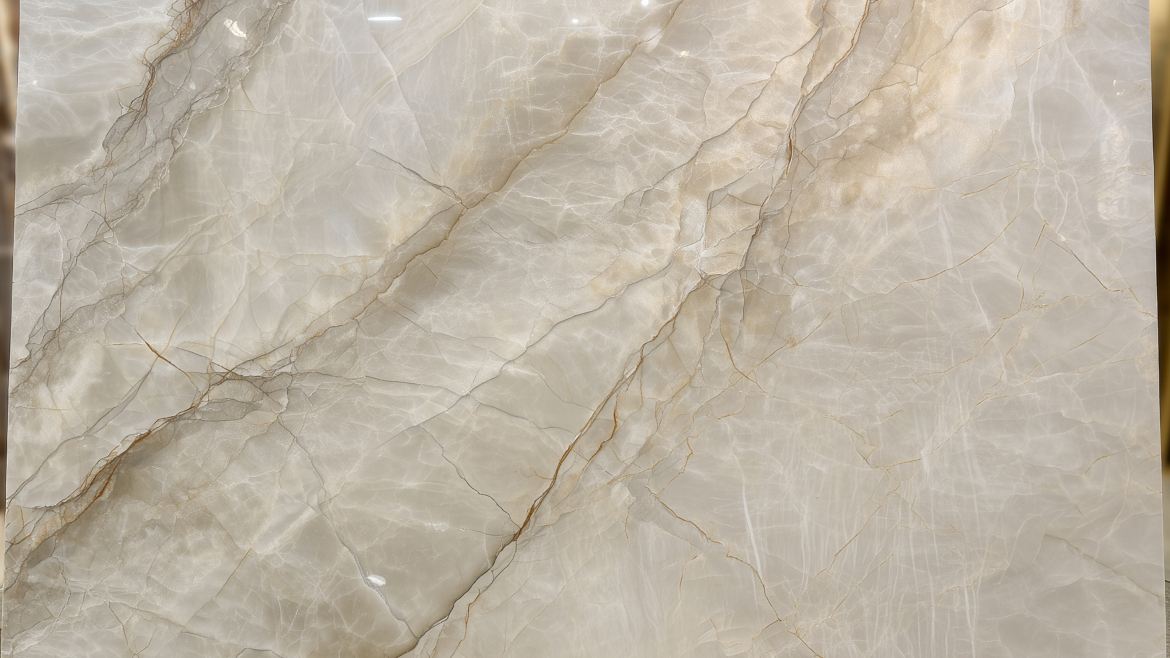
Is quartzite worth it? For most San Diego homeowners who actually cook, yes, though the honest answer depends on what you want out of a kitchen.
Quartzite is a natural stone that reads like marble and behaves far better than marble under real use. It also costs more than quartz and asks to be sealed about once a year. That trade sounds worse on paper than it feels in a working kitchen.
So the useful question isn’t whether quartzite is expensive. It’s what you get for the money, and whether those things matter in your house.
Key Takeaways
- Quartzite runs $80 to $200+ per square foot installed in San Diego, which puts it above quartz and in the same range as marble.
- It scores a 7 on the Mohs hardness scale, harder than granite and far harder than marble, and it takes a hot pan straight off the burner.
- The one real ownership cost is sealing, about once a year, roughly $20 if you do it yourself. We include the first seal with your installation.
The Short Answer, and Who Should Skip It
Quartzite is a metamorphic stone, formed from sandstone under heat and pressure, and it comes out of that process dense enough to shrug off knives, hot pans, and years of daily cooking. If you have been eyeing marble and quietly worrying about what a lemon or a splash of red wine will do to it, quartzite is the stone that solves that problem without giving up the veining.
It is worth the money if:
- You cook regularly and want a surface that keeps up
- You want natural stone with veining nobody else has
- You like the marble look but not the marble worry
- You plan to stay in the house, or you are in a neighborhood where buyers notice real stone
Choose something else if:
- You want a surface you never think about again, since quartz and porcelain never need sealing
- Your budget is firm at the lower end, where other stones give you more square footage for the money
- This is for an outdoor kitchen or a BBQ island
That last one is worth saying plainly. Quartzite belongs indoors. Weather and standing moisture wear down the sealer faster than they would inside, and citrus and acidic marinades can etch the surface. Porcelain is the right call outdoors, and we fabricate it.
That is the whole decision. The rest of this is the detail behind it.
What Quartzite Actually Costs in San Diego
Quartzite sits at the premium end, alongside high end quartz and marble. What you pay depends almost entirely on which slab you fall for, because rarity drives the price far more than fabrication does.
The Three Tiers
Entry level runs $80 to $110 per square foot installed. Super White, Sea Pearl, and similar varieties. Still real stone, still Mohs 7, just quieter veining.
Mid range runs $110 to $160 per square foot installed. This is where Taj Mahal, Calacatta Macaubas, and Perla Venata live, the stones with the movement people stop and stare at.
Premium starts at $160 and can go over $250 per square foot installed. Exotic colorways, rare lots, and book matched installations where the veining mirrors across an island.
What a Full Kitchen Runs
For a typical San Diego kitchen of 40 to 50 square feet, that works out to roughly $3,200 to $5,500 at the entry level, $4,400 to $8,000 in the mid range, and $6,400 to $12,500+ for premium slabs.
Worth noticing: the gap between the cheapest quartzite and the most expensive is not a quality gap. Every tier is the same hardness, the same heat resistance, the same 50 year stone. You are paying for how dramatic it looks, not how well it works.
What That Number Already Includes
The per square foot price covers material, fabrication, templating, edge profiles, sink cutouts, and installation. Your estimate arrives itemized, so you can see each piece rather than taking a flat number on faith.
Templating is part of it. Once your cabinets are set, we come out and measure your space to about 1/16 inch, marking every cutout, every corner, and every wall that is not as square as it looks. Then your slab gets cut on our CNC bridge saw and waterjet at our El Cajon shop, using diamond blades made for stone this hard.
The Edge, and Why There Is No Upcharge
This is where people brace for an upgrade fee and do not get one.
Our standard is a 2cm mitered edge, built up to a full 2 inches thick, and it costs the same as a simple eased or beveled edge. It carries a 1/8 inch top radius, so the visible profile looks exactly like an eased edge. The difference is thickness, not shape.
That thickness point confuses almost everyone, and the naming is why. 2cm stone is about 3/4 inch. 3cm is about 1 1/4 inch. So a 2cm slab with a mitered edge built to 2 inches is thicker at the finished edge than an unmitered 3cm slab. Three sounds bigger than two, and the finished edge says otherwise.
Cutouts
Cutouts are itemized and stated up front. Cooktop cutouts run $150 to $250. Sink cutouts run $200 to $340, depending on complexity and whether you are going undermount. Faucet holes are included with your sink cutout at no extra charge.
Where Cost Actually Climbs
Waterfall panels cost more because the stone running down the side of an island is more material. Detailed profiles like ogee or bullnose cost more because they take more time and skill to shape. That is the honest conversation about edge pricing, and it has nothing to do with mitered versus eased.
Where Quartzite Earns Its Price
Hardness. Quartzite scores a 7 on the Mohs scale. Granite sits around 6 to 6.5, marble down at 3 to 4. In practice that means knives, keys, and the general chaos of a family kitchen do not leave marks.
Heat. A pan straight off the burner goes on quartzite without ceremony. No trivet hunt, no discoloration.
A slab nobody else has. Veining, movement, and color came out of millions of years underground, so no two slabs match. Engineered surfaces are consistent by design, which is exactly the point of them, but consistency is not what people want from a statement island.
It holds up to San Diego. Quartzite keeps its color under our sun, and its density means coastal salt air does not corrode it. Homes in La Jolla, Del Mar, and Coronado do fine with it as long as the sealing stays current.
It lasts. With reasonable care, quartzite counters go 50 years or more. For most people that is the last countertop they buy for that house.
The Trade-Off Nobody Should Gloss Over
Quartzite is porous. It needs sealing, and pretending otherwise would set you up for a stain you did not expect.
For typical kitchen use, once a year is a good starting point. Some of the more porous slabs want it every 6 to 12 months. Denser slabs go longer. Two things move that number: the stone itself, since lighter and more porous slabs drink more, and the sealer, since quality varies more than people expect.
The actual work is about 30 minutes with a bottle of penetrating impregnating sealer, roughly $20. If you would rather not, having it done runs $100 to $200. We seal your quartzite right after installation, so your first year is covered.
Everyday Care
Daily care is unremarkable. Mild dish soap, warm water, a soft cloth. Skip vinegar, citrus cleaners, and bleach, since acidic and harsh cleaners break down the sealer. Wipe up wine, lemon juice, and tomato sauce rather than letting them sit overnight.
That is the entire maintenance routine. It is less than most people picture when they hear the word porous.
Sealing, and Why the Water Test Beats a Calendar
A calendar tells you what is typical. The stone tells you what is true. Test yours instead of guessing.
Put a small puddle of water on the counter and watch it. Darkening in the first few minutes means the sealer is thin and the stone is drinking. For a reliable read, leave the puddle sitting for 30 minutes. If there is no darkening or absorption at the 30 minute mark, your sealer is still doing its job and you can leave it alone.
That is the whole test. It costs nothing, it takes half an hour of ignoring a puddle, and it is more accurate than any interval anyone can quote you, including us. Run it once or twice a year in the spot that takes the most abuse, usually next to the sink or beside the cooktop, and you will always know where you stand.
Quartzite vs Marble: The Case for the Harder Stone
Marble and quartzite overlap on price. Marble runs $75 to $250+ per square foot installed, quartzite $80 to $200+. So this is rarely a budget decision. It is a decision about how you want to live with the stone.
Marble is genuinely beautiful, and there are kitchens where nothing else will do. It also sits at 3 to 4 on the Mohs scale, wants sealing every 6 to 12 months, and etches. Etching is a chemical reaction between acid and calcite, which means sealing slows staining but does not prevent etching. Plenty of homeowners love marble anyway and treat the patina as part of the story.
Quartzite is for the homeowner who wants that look and does not want the patina. Same dramatic veining, Mohs 7 instead of 3 to 4, sealing about once a year instead of twice, and no etching worry from a squeezed lemon.
If you cook most nights, quartzite is usually the version of that look you will still be happy with in year five.
Quartzite vs Quartz: Two Different Kinds of Easy
Quartz runs $70 to $130 per square foot installed, so it is the more affordable of the two, and it never needs sealing. Non porous, engineered, consistent from slab to slab.
Where quartz gives ground is heat and character. The resin binder can scorch or discolor under high heat, so trivets matter. It is also not for outdoors, since UV exposure yellows it. And because it is manufactured, the pattern that looks great on a sample looks the same across every slab in the run.
Quartzite flips that. Better under heat, one of a kind veining, and the sealing to keep up with.
Neither one is the better material. Quartz is easier to own. Quartzite is better to look at and tougher under a hot pan. We fabricate both, and the right answer is whichever trade you would rather make.
The Long View, What Quartzite Costs Per Year
Countertops get priced like a purchase and used like infrastructure, which is why the sticker feels heavier than it should.
Take the mid range kitchen above, 40 to 50 square feet at $4,400 to $8,000. Spread across a 50 year service life, that is roughly $88 to $160 a year. Add about $20 a year for a bottle of sealer if you do it yourself. Those are ballpark figures rather than a quote, but the shape of the number is the point.
There is a resale angle too. In La Jolla, Rancho Santa Fe, Del Mar, and Coronado, buyers notice natural stone, and a one of a kind slab is not something a spec kitchen can match. That is not a guaranteed return, and we will not pretend to a number, but it is real in the premium pockets of this county.
The stronger argument is simpler. Countertops you do not have to replace are cheaper than countertops you do.
Getting the Quartzite Look Without the Premium Tier
If quartzite is what you want and the premium tier is not where your budget lives, there is room to move.
Start with entry level varieties. Super White and Sea Pearl at $80 to $110 installed are the same Mohs 7 stone as the expensive ones. You give up drama, not durability.
Do not budget for an edge upgrade. The mitered edge is already included at the same price as eased or beveled, so that is not a line to save on. Ogee, bullnose, and waterfall panels are where edge cost actually lives.
Put the good slab where it shows. A mid range quartzite on the island with quieter perimeter runs stretches the budget toward the surface people actually look at.
See full slabs before you commit. A 4 by 4 sample tells you almost nothing about how veining lands on an eight foot island. Because we work with a network of partnered showrooms across San Diego County, just call or email us with the material you are looking for and we will direct you to the partnered showroom that has it in stock so you can view the full slab in person.
Ask us what came in recently. Quartzite inventory moves, and the pricing on any given lot moves with it.
What San Diego Homeowners Get Surprised By Most
After decades of doing this locally, the same few things come up on quartzite estimates.
Sealing is number one, and usually not in the way people expect. Homeowners hear the word porous and picture a chore. Then they find out it is a $20 bottle and half an hour once a year, and the objection disappears. The surprise runs the other direction just as often, when someone assumed quartzite was the same as quartz and never needed sealing at all.
The name causes real confusion. Quartzite and quartz sound like the same thing and are not remotely related. One is natural stone cut out of the ground, the other is engineered from ground quartz and resin. People arrive having researched the wrong material more often than you would think.
Price tiers surprise people in a good way. Almost everyone assumes the cheaper quartzite must be softer or less durable. It is not. Super White is the same Mohs 7 as the exotic slabs. What you are paying extra for is drama.
And the outdoor question comes up constantly, usually attached to a beautiful slab someone has already fallen for. Quartzite is an indoor stone. We would rather redirect you to porcelain for the BBQ island than sell you the wrong material and see it fail in a year.
Frequently Asked Questions
Is quartzite more expensive than granite?
Usually, yes. Granite runs $75 to $125+ per square foot installed and quartzite runs $80 to $200+, so the ranges overlap at the bottom and separate at the top. Entry level quartzite at $80 to $110 lands close to mid range granite. The gap widens with the exotic slabs, where rarity drives the price. Quartzite is also the harder stone at Mohs 7 versus granite’s 6 to 6.5, though in a kitchen both are hard enough that you will not notice the difference day to day.
Does quartzite stain?
It can, if the sealer has worn thin and a spill sits. Sealed quartzite handles wine, coffee, oil, and tomato sauce without trouble as long as you wipe them up rather than leaving them overnight. Sealing about once a year for typical kitchen use keeps that protection in place, and the 30 minute water test tells you when it is actually due rather than making you guess.
Can I use quartzite for an outdoor kitchen?
We do not recommend it. Sun, weather, and standing moisture wear the sealer faster than they would indoors, and acidic marinades and citrus can etch the surface. For outdoor kitchens and BBQ islands we use porcelain instead, which handles UV and weather without sealing at all.
How long does a quartzite kitchen take from start to finish?
About 7 days from template to install, depending on the size of the job. We template your space to 1/16 inch after you have chosen your slabs, fabricate in house, and then installation day itself usually runs 4 to 8 hours for a typical kitchen. We seal the stone right after installation and walk the finished job with you.
Is quartzite worth it if I might sell the house in a few years?
In San Diego’s premium neighborhoods, natural stone gets noticed, and a slab with veining nobody else has is not something a builder grade kitchen can match. We would not promise you a specific return, since that depends on your home and your market. If you are selling soon and want the biggest visual change for the least money, entry level quartzite at $80 to $110 per square foot gives you real stone at the lower end of the range.
What is the least expensive quartzite that still looks good?
Super White and Sea Pearl, both in the $80 to $110 per square foot installed range. Super White has a crisp white background with subtle gray veining and gets mistaken for marble constantly. Sea Pearl runs soft gray green with flowing movement and suits coastal and transitional kitchens. Neither is a lesser stone. They are the same hardness and heat resistance as the premium slabs, with quieter veining.
Get a Real Number for Your Quartzite Kitchen
The fastest way to find out whether quartzite fits your budget is to have someone measure your space and put the figures in front of you.
Book a free in-home estimate with Granite and Marble Concepts. We will measure your kitchen, count your cutouts, talk through slab tiers and where the good stone should go, and give you an itemized estimate you can actually read. Our team has more than 50 years of combined experience with natural stone, and we fabricate every slab in house at our El Cajon shop.
Two easy ways to get started:
- Call us at (619) 202-0017 to schedule your free in-home estimate.
- Email albert@graniteandmarbleconcepts.com if you would rather skip the visit. Send cabinet drawings if you have them, or honestly just a rough sketch of your existing counters with a few photos and any questions you have. That is plenty for us to work from, which matters if you are replacing counters and keeping your cabinets.
We serve San Diego County with straight answers and no pressure. If quartzite is not the right stone for your kitchen, we will tell you that too.
Leave a reply