
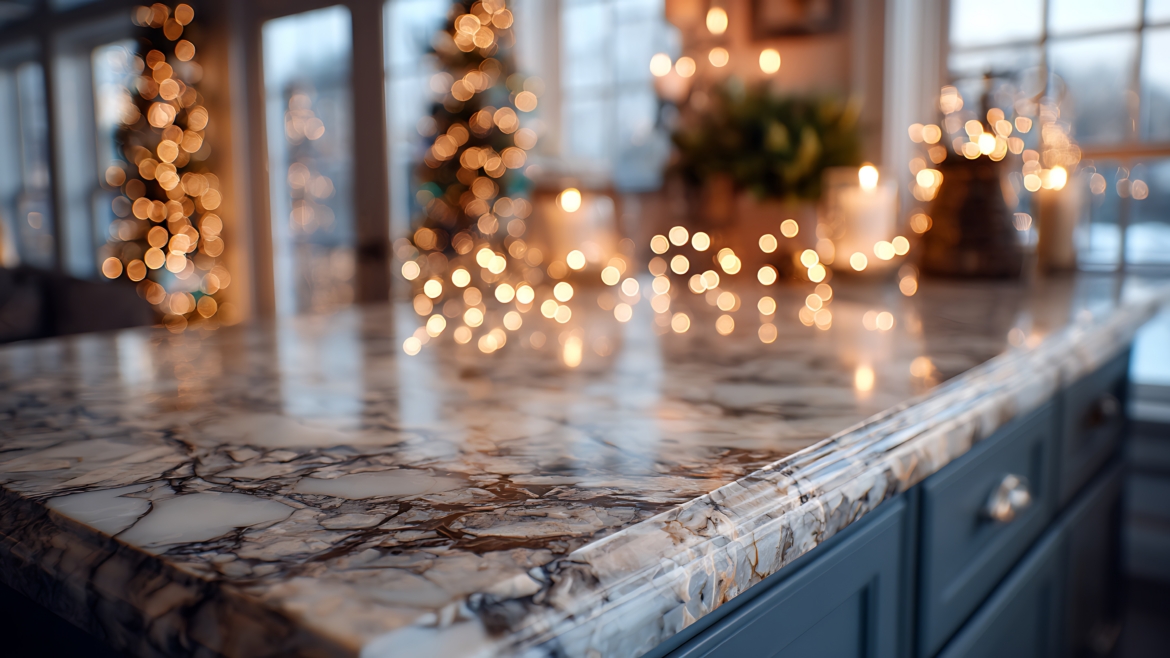
Granite vs quartzite is a closer contest than most comparisons, because both are natural stone, both handle heat, and neither one etches the way marble does. If you have already ruled out marble for a working kitchen, these two are usually what is left.
The short version is that quartzite is the harder stone, granite is the better value, and the deciding factor for most kitchens is not durability at all. Here is what actually separates them.
Granite vs Quartzite: The Short Answer
Quartzite wins the hardness contest. It is more scratch resistant than granite, and on the narrow question of which stone is tougher, that is the answer.
But durability is not one number, and in a real kitchen the gap is smaller than the spec sheet suggests. Granite is already hard enough that scratching it during normal cooking is not something we see as a common complaint. Meanwhile granite costs meaningfully less, and quartzite has one real variable that granite does not: how porous the individual slab is.
So the honest framing is this. If you want the veined, marble-like look, quartzite is the reason to spend more. If you like the look of granite, granite gives you close to the same performance for less money.
What Granite and Quartzite Actually Are
Granite is igneous rock
Granite formed from cooling magma deep underground. That slow cooling is what produces the crystalline, speckled look people recognize, with visible grains of different minerals scattered through the slab.
It is quarried in blocks and cut into slabs, so every piece is unique. It is also porous, which is why granite gets sealed.
Quartzite is metamorphic rock
Quartzite started life as sandstone. Buried under enormous heat and pressure over a very long time, the quartz grains fused and interlocked into a single dense mass. That fusing is where the hardness comes from.
The look is completely different from granite. Instead of speckles you get veining, often light backgrounds with dramatic movement running through them, which is why quartzite gets compared to marble constantly.
Which One Is Actually Harder
Quartzite rates a 7 on the Mohs hardness scale, which puts it among the harder natural stones used for countertops. Granite is typically a step below that, and it varies depending on the mineral makeup of the particular stone.
What that means in a kitchen is fairly modest. A quartzite counter is more resistant to scratching from things like ceramic dishes and unglazed pottery bases. Granite is still hard enough that most homeowners never scratch it. Neither one should be used as a cutting board, and both will dull your knives long before your knife damages them.
One thing we want to be clear about, because it circulates a lot: quartzite does not require cabinet reinforcement. It is a normal stone countertop and it sits on normal cabinets. If someone tells you your cabinets need to be beefed up for quartzite specifically, ask them why.
Heat, Acid and Everyday Wear
This is where both stones pull ahead of the engineered options, and where they are essentially tied with each other.
On heat, both are excellent. Neither one contains resin, so there is no binder to scorch and no thermal shock risk the way there is with quartz. A hot pan on granite or quartzite is not a problem.
On acid, both are fine. Granite and quartzite are silicate stones, not carbonate stones like marble and dolomite. Lemon juice, vinegar and wine do not etch them. This is the single biggest reason people who love the marble look end up in quartzite instead.
On chipping, both behave like natural stone. An edge can chip if you hit it hard with something heavy, and that is true of every stone surface including quartz.
Sealing: Where Granite and Quartzite Differ Most
Both stones are porous and both need sealing, but they do not behave the same way, and this is the practical difference most people never hear about before they buy.
Granite is fairly predictable. In a working kitchen it often wants resealing every 6 to 12 months. In a low-use area like a guest bath, every one to two years is common. Outdoors, plan on 6 to 12 months because sun and weather are harder on the sealer.
Quartzite is less predictable, because porosity varies a lot from slab to slab. A very dense quartzite can go well past a year. A more open one can want attention every 6 to 12 months. About once a year is a reasonable expectation for a typical kitchen, but the slab you actually pick is what determines it.
Either way, do not seal on a calendar. Run the water test. Put a small puddle of water on the surface and watch it. If the stone darkens within a few minutes, the sealer is thin and it is time. If the puddle sits for thirty minutes and the stone underneath is still clean and light, leave it alone.
The first seal is included with your installation. Later reseals are a paid visit, though plenty of our customers handle them at home once we show them how. We recommend STAIN-PROOF Dense Stone Impregnating Sealer, available at Arizona Tile here in San Diego County.
What Granite and Quartzite Cost in San Diego
Installed pricing across San Diego County runs about:
- Granite: $75 to $125 per square foot
- Quartzite: $80 to $200 and up per square foot
The bottom of both ranges is close. The top is where they separate, and that is entirely about slab selection. Common granites and entry-level quartzites overlap. The dramatic, heavily veined quartzites that people fall in love with sit near the top of that range and keep going from there.
Fabrication costs are the same for both. A sink cutout runs $200 to $340 with faucet holes included. A cooktop cutout runs $150 to $250. Carved edge profiles run $10 to $30 per linear foot. Tearing out your existing counters runs $300 to $800. We charge one rate across San Diego County, so where you live does not change the number.
The Quartzite Naming Problem
This one is worth knowing before you shop, because it costs people real money.
A fair amount of material gets sold as quartzite that is not actually quartzite. Some of it is dolomite, some of it is marble. Those stones look similar, and they are often beautiful, but they are carbonate stones, which means they etch. Someone who bought a soft stone believing it was quartzite finds out the first time a lemon sits on the counter.
Granite does not have this problem. Granite is sold as granite and behaves like granite.
If you are shopping quartzite and a slab is priced noticeably below the others with a similar look, that is worth asking about before you commit. A slab yard that knows its material will give you a straight answer about where a stone came from.
Both Work Outdoors
If your project includes an outdoor kitchen, either stone is a legitimate choice. Granite and quartzite both hold up to sun and weather, which is not true of quartz. Quartz is an indoor material for most manufacturers, with Caesarstone offering a small number of colors rated for outdoor use.
The main adjustment outdoors is sealing frequency. Plan on resealing more often than you would inside, and use the same water test to tell you when.
How to Choose Between Granite and Quartzite
After all of the above, the decision usually comes down to two questions.
What look do you want? If you want veining and movement and a lighter, marble-inspired kitchen, quartzite is what delivers that in a stone that will take daily use. If you like the depth and character of a speckled natural stone, granite gives you enormous variety and you will not be paying a premium for the look.
What is your budget for the slab? Granite gets you a natural stone kitchen at the lower end of natural stone pricing. Quartzite asks for more, and the stones people actually want tend to sit toward the upper end of the range.
Durability is real but it is rarely the tiebreaker, because both of these stones will outlast the kitchen they go into.
We specialize in granite, marble, quartzite, quartz, porcelain, soapstone and dolomite. If you have something else in mind, ask us and we are happy to talk it through.
How We Fabricate Granite and Quartzite
Both are natural stone, so the shop process is similar, with a couple of differences worth knowing.
Slab layout matters for both, and more for quartzite. With a heavily veined quartzite, where a seam lands and how the veining runs across an island is a decision rather than a default. We lay the pieces out on the actual slab so the movement flows the way you want it to. With granite the pattern is usually more consistent across the slab, so layout is more about seam placement and getting the most out of the material.
Quartzite is harder to cut, which is a shop problem rather than a customer problem. We cut on a CNC bridge saw and a waterjet, and both stones are well within what that equipment handles.
Edge work is the same for both. Every profile we fabricate is built up to at least 1 1/2 inches. Our standard is 1 5/8 inches, which is what about eighty percent of our customers choose, and 2 inch and 2 1/4 inch builds are available. We do not charge for the taller miter itself, only for the second layer of plywood underlayment it requires. We fabricate ten edge profiles in-house.
Timing is the same either way. A typical kitchen runs about seven days from template to install. A bathroom is usually two to three days.
Frequently Asked Questions
Is quartzite better than granite?
Quartzite is harder and more scratch resistant. Whether that makes it better depends on what you want. Granite costs less and performs nearly as well in a normal kitchen, so quartzite is usually worth the premium for the look rather than for the durability.
Does granite or quartzite need more sealing?
Granite is more predictable, typically every 6 to 12 months in a working kitchen. Quartzite varies by slab, with denser stones going longer than a year and more porous ones wanting attention every 6 to 12 months. Use the water test rather than a calendar for either one.
Can you put hot pans on granite and quartzite?
Yes. Neither stone contains resin, so there is no binder to scorch and no thermal shock risk the way there is with engineered quartz. Both handle hot cookware without trouble.
Do granite or quartzite countertops etch?
No. Both are silicate stones rather than carbonate stones, so acidic food does not etch them. That is the main advantage both have over marble and dolomite.
Which costs more, granite or quartzite?
Quartzite, usually. Granite runs $75 to $125 per square foot installed. Quartzite runs $80 to $200 and up. The entry points are close, but the quartzites people tend to choose sit higher in the range.
Does quartzite need reinforced cabinets?
No. Quartzite installs on standard cabinets like any other stone countertop. There is no special structural requirement for it.
Talk to Us About Your Kitchen
Granite and Marble Concepts is a family-run fabrication and installation shop in El Cajon, serving all of San Diego County. We measure, fabricate and install in-house, so one shop is responsible for your project from template through install day.
If you are weighing granite against quartzite, the fastest way to decide is to stand in front of real slabs of both. The difference in look is obvious in person and almost impossible to judge from photos. Call us at (619) 202-0017 or send us an email and we will set up a free in-home estimate.
If you want to see full slabs of a specific material, just call or email us with the material you are looking for and we will direct you to the partnered showroom that has it in stock.
Leave a reply