
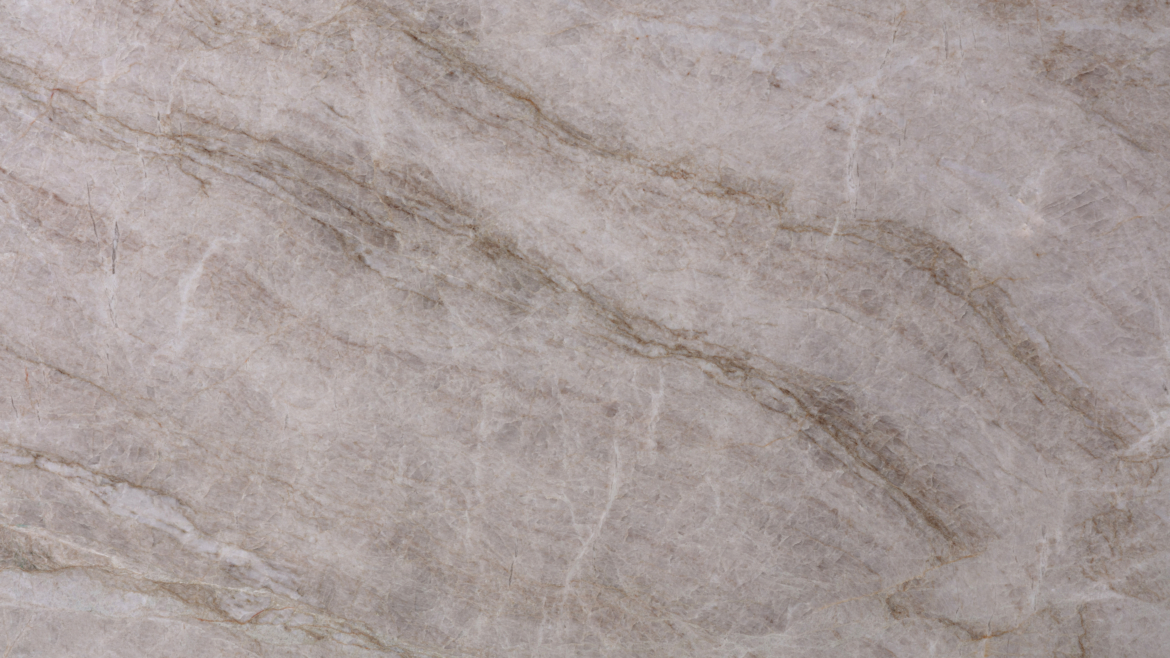
Quartzite colors run from warm ivory through icy translucent white to deep cobalt blue, and choosing between them is harder than it looks, partly because some of the slabs sold as quartzite are not quartzite at all.
Below are the ten most popular true quartzites on the market, all genuine quartzite rather than dolomite or marble sold under a quartzite name. Alongside each one is what we see here in San Diego, since global sales rankings and what actually walks through a local shop are not always the same thing.
We have fabricated every quartzite on the market over the years. That is most of why we can tell you which of these you will realistically find here, and which one you should not fall in love with from a photograph.
Key Takeaways
- Taj Mahal is the top seller worldwide and the quartzite we fabricate most in San Diego. Warm, versatile, and reliably available.
- Some slabs sold as quartzite are actually dolomite. We can usually tell by looking at the slab, and we tell you before anything gets cut.
- Quartzite runs $80 to $200 and up per square foot installed, and the color you choose is most of what moves that number.
The 10 Most Popular Quartzite Colors
Ranked by global market popularity. Every one of these is true quartzite, a silicate stone that rates a 7 on the Mohs scale and does not etch from acid the way carbonate stones do.
1. Taj Mahal
Warm ivory and cream base with subtle, flowing gold and taupe veins. It has been the number one selling quartzite worldwide for over a decade, and it is the one we fabricate most in San Diego.
The reason it sells everywhere is that it does not commit your kitchen to a single look. The movement is gentle enough to sit alongside white cabinets, wood tones or warmer neutrals without fighting any of them. It also comes in reliably, which matters more than people expect when a kitchen needs more than one slab.
2. Cristallo
Translucent, icy white with fine amber and gold crystalline lines. The most popular luxury quartzite, and often backlit in installations because light genuinely passes through it.
We fabricate it regularly, and it is worth being straight about the tier it sits in. Cristallo is priced well above the rest of this list, supply comes and goes, and slabs are hand selected. Most kitchens do not end up here on budget. If the look appeals but the price does not, a bright white quartzite with strong veining is the direction to go rather than compromising on the same stone.
3. Perla Venata
Soft sand-and-cream backdrop with muted, calm movement. A high-volume seller and the usual answer for people who like Taj Mahal but find it too gold.
If your cabinets or flooring already run warm, Perla Venata gives you a similar softness without pushing the room further in that direction.
4. Mont Blanc
Cool, luminous white with sweeping charcoal waves. The top-selling true quartzite for homeowners who want a classic white marble look in a stone that does not etch.
It suits a kitchen where the counter is meant to support the room rather than lead it, and the relatively even movement makes multi-slab jobs easier to plan.
5. White Macaubas
Crisp white with strong, parallel linear gray stripes. A leading choice for modern designs, waterfall islands and book-matching, precisely because the veining runs in a predictable direction.
That linear pattern is what makes it work on a waterfall, where the stone turns the corner and runs to the floor. Veins that carry straight down the panel read as one continuous piece. We do a slab layout from your measurements before you buy, which matters more on a book-matched or waterfall job than anywhere else.
6. Sea Pearl
Soft silver-grays and muted whites with very faint sage undertones. The go-to for organic, calming or coastal kitchens, which makes it a natural fit in a lot of San Diego homes.
The green cast is subtle and it shifts with the light, so this is one to see in daylight rather than under showroom lighting.
7. Azul Macaubas
Brilliant sky blue to deep cobalt with white and gold streaks. The most recognized colorful exotic quartzite in the world.
This is a statement piece, not a neutral. It works when the rest of the room stays quiet and lets the stone lead. In a kitchen that already has patterned tile or busy hardware, it competes rather than complements.
8. Zermatt
A uniform, pure white base with faint, faded silver wisps. Demand has been rising as people look for the Calacatta marble look without marble’s etching problem.
If you have decided you want that aesthetic but not the maintenance conversation that comes with marble, Zermatt is close to the answer in natural stone.
9. Macaubas Giotto
Soft gray with a network of intersecting geometric charcoal lines. Architects and designers reach for it in modern, structured spaces, because the pattern reads as deliberate rather than random.
10. Blue Roma
Ice-blue and slate-gray base crisscrossed with thick copper and gold veins. The leading artistic statement piece in luxury design right now.
Like Azul Macaubas, this is a stone that becomes the feature of the room. Worth seeing a full slab, since the veining varies enormously piece to piece and a sample tells you almost nothing.
What We See Most in San Diego
Global rankings and local reality overlap, but not perfectly. Out of that ten, the ones that come through our El Cajon shop most often are Taj Mahal first, then Cristallo, then White Macaubas and Mont Blanc.
Taj Mahal leads for the same reason it leads worldwide. It suits the widest range of kitchens and it is consistently available, so a job that needs three slabs can actually get three slabs that match.
Cristallo sitting that high is more particular to our recent clientele than to the market. We have had a run of requests for it lately, which is not typical, and we would not want a homeowner reading this to think it is the normal second choice on budget. For most kitchens it is not.
The blues, Azul Macaubas and Blue Roma, come through less often here, and almost always as an island or a single feature rather than as a full kitchen. That is usually the right way to use them.
The Naming Problem, and How We Handle It
This is the part of quartzite shopping nobody warns you about, and it is the reason the list above specifies true quartzite.
A number of slabs sold as quartzite are actually dolomite. Super White is the most common example, marketed as quartzite across the industry while most of what is out there is dolomite or a dolomite blend. Other names turn up on both sides of the line depending on the lot and the yard.
It matters because the two stones behave differently. Quartzite is a silicate and does not etch from acid. Dolomite is a carbonate and does etch, though more slowly than marble. Same look, different care.
We can usually tell by looking at the slab
After enough years of fabricating both, the difference is visible in the stone itself. When we look at a slab and see dolomite rather than quartzite, we tell you before anything gets cut.
Here is what actually happens next, and it may not be what you expect. Most customers do not mind at all. They love the color, that is what they came for, and the stone is still beautiful. What changes is the care conversation: dolomite wants prompt cleanup of citrus, wine and vinegar, and it will etch if those sit.
The problem is not dolomite. Dolomite makes a lovely countertop. The problem is buying dolomite while believing it is quartzite, then finding out the first time somebody squeezes a lemon.
The check you can do yourself
If you want to test a slab you already own, quartzite is hard enough to scratch glass and dolomite is not. Drag a raw edge across a piece of glass. No mark means you are almost certainly looking at dolomite.
The simpler route is to tell us the slab you are considering before you commit, and we will tell you what we are looking at and what it will need from you.
A Word on How This Decision Usually Goes
After enough of these projects, a pattern shows up. Somebody comes in with a shortlist, a budget and a plan, then sees a particular slab in person and the shortlist stops mattering.
It happens with color more than anything else. When someone falls for a specific stone, the tier it sits in often becomes secondary. Some people hold firm on budget, and that is a perfectly good way to shop. But a lot of homeowners end up with the slab they connected with rather than the one on the plan.
Worth knowing before you go looking, for two reasons. If your budget is genuinely fixed, tell us up front and we will point you toward the stones that fit it rather than the ones that will tempt you past it. And if you have some room, seeing full slabs in person matters more than any ranking, because the one you respond to is unlikely to be the one you expected from photographs.
Either way, the list above is a starting point rather than an answer.
How to Choose Between Them
Once you know what is real quartzite, three things decide it.
How much the stone should say
The most useful question you can ask yourself. Should the countertop be the feature of the room, or the surface that lets everything else be the feature?
Azul Macaubas, Blue Roma and Cristallo lead. Taj Mahal, White Macaubas and Macaubas Giotto sit in the middle. Perla Venata, Mont Blanc, Sea Pearl and Zermatt recede. Neither end is better, but picking the wrong end for your kitchen is the regret that cannot be fixed after fabrication.
Warm or cool
Taj Mahal and Perla Venata run warm. Mont Blanc, Zermatt, White Macaubas and Macaubas Giotto run cool. Sea Pearl sits between with its faint green cast, and the blues are their own category.
Match that to your cabinets and flooring rather than to a photo. A warm stone against cool gray cabinets reads as a mismatch in person even when both looked good separately.
How your kitchen light works
San Diego light is bright and it changes through the day, especially in coastal homes with big windows. A slab that looks perfect under showroom lighting can read completely differently at home.
That is the argument for seeing full slabs in daylight rather than choosing from samples. Because we work with a network of partnered showrooms across San Diego County, call or email us with the colors you are considering and we will direct you to the partnered showroom that has them in stock.
What Quartzite Costs, Whichever Color You Pick
Quartzite runs $80 to $200 and up per square foot installed in San Diego. That covers the slab, templating at your home, fabrication at our El Cajon shop, your edge profile, cutouts and installation.
Where you land is mostly the stone. Taj Mahal, Perla Venata, Mont Blanc and Zermatt sit in the more accessible part of the range. Sea Pearl, White Macaubas and Macaubas Giotto sit in the middle. Azul Macaubas, Blue Roma and especially Cristallo are at the top.
The line items are the same regardless of color:
- Cooktop cutout: $150 to $250
- Sink cutout: $200 to $340, with faucet holes included at no extra charge
- Carved edge profiles: $10 to $30 per linear foot beyond the standard mitered edge, which is included
- Tear-out and disposal of your old countertops: $300 to $800 depending on size and scope
Our standard is a 2cm mitered edge built up to 1 5/8 inches, and about 80 percent of our customers take it. It costs the same as a simple eased or beveled edge. If you want the miter built to 2 inches or 2 1/4, we do not charge for the taller miter itself, only for the second layer of plywood underlayment a taller edge requires.
A waterfall island goes on your estimate as its own line item, since it takes extra stone for the panel, extra shop time for the mitered corner, and extra time on install day.
Living With Quartzite
Care does not change much between colors, though lighter and more porous slabs want attention a little more often than denser ones.
Sealing runs about once a year for typical kitchen use. More porous slabs may want it every 6 to 12 months, and denser slabs go longer. Rather than working off a calendar, run the water test: put a small puddle of water on the counter, and if the stone darkens in the first few minutes the sealer is thin. For a reliable read, leave it 30 minutes. No darkening at that point means you are still protected.
We apply the first seal at installation. After that a bottle runs about $20 if you do it yourself, or $100 to $200 to have it done.
Day to day it is warm water and mild dish soap, or a pH neutral stone cleaner. Skip vinegar and citrus-based products, which break down sealer faster than normal use does.
Quartzite takes a hot pan straight off the burner, and it works outdoors as well as in, since it is UV stable and much less likely to fade or yellow in direct sunlight than engineered quartz. Exact outdoor performance depends on the specific slab and the installation.
Frequently Asked Questions
What is the most popular quartzite color?
Taj Mahal, both worldwide and in our own shop. It has a warm ivory and cream base with soft gold and taupe veining, gentle enough to work alongside white cabinets, wood tones or warmer neutrals without fighting them. It is also reliably available, which matters when a kitchen needs more than one slab and you want them to match.
Which quartzite looks most like marble?
Mont Blanc and Zermatt are the closest. Mont Blanc has a cool white background with sweeping charcoal veining, and Zermatt is a more uniform white with faint silver wisps that reads close to Calacatta. Both give you the marble aesthetic without the etching that makes marble difficult in a working kitchen. White Macaubas is another option if you prefer more linear, structured veining.
Why is Cristallo so expensive?
Rarity, mostly. Cristallo is a translucent, crystalline quartzite that light passes through, which is why it is so often backlit. Supply comes and goes and slabs are hand selected, so it sits well above the rest of this list on price. We fabricate it regularly, and we would rather tell you the tier it sits in before you fall in love with a photograph of it.
Is Super White real quartzite?
Usually not. Most Super White is dolomite or a dolomite blend, despite being sold as quartzite across the industry. That matters because dolomite is a carbonate stone that etches from acid while true quartzite does not. It still makes a beautiful countertop, and most of our customers who find out it is dolomite go ahead anyway because they love the color. What changes is the care: prompt cleanup of citrus, wine and vinegar.
How do I know if a slab is really quartzite?
Tell us the slab you are considering and we will tell you what we are looking at. After enough years fabricating both stones, the difference is usually visible in the slab itself, and we let you know before anything gets cut. If you want to check a slab you already own, quartzite is hard enough to scratch glass and dolomite is not.
Do different quartzite colors need different care?
The routine is the same, though the timing shifts a little. Sealing runs about once a year for typical kitchen use, with lighter and more porous slabs wanting it closer to every 6 to 12 months and denser slabs going longer. The water test is the real answer for any of them: a small puddle that has not darkened the stone after 30 minutes means your sealer is still working.
See Quartzite Slabs in San Diego
Choosing a quartzite color from photographs is how people end up surprised on install day. These stones vary substantially within their own names, and the light in your kitchen is not the light in a photograph.
Because we work with a network of partnered showrooms across San Diego County, call or email us with the colors you are considering and we will direct you to the partnered showroom that has them in stock, so you can compare full slabs in person. Tell us the names you have in mind and we will also tell you what we are actually looking at, which is worth knowing in this category.
Two ways to start:
- Call us at (619) 202-0017 to schedule your free in-home estimate.
- Email albert@graniteandmarbleconcepts.com with your cabinet drawings, or just a sketch and a few photos, and we will put together a detailed quote.
Have a material in mind that is not on our list? Just ask. We are happy to talk through your options.
We fabricate and install quartzite throughout San Diego County from our shop in El Cajon. If a stone is wrong for your kitchen, we will tell you that too.
Leave a reply